

Facts About Fossil Fuel Sources
The biggest US fossil fuel generators of greenhouse gases by sector are:
- Transportation 29%
- Electricity 25%
- Industry 23%
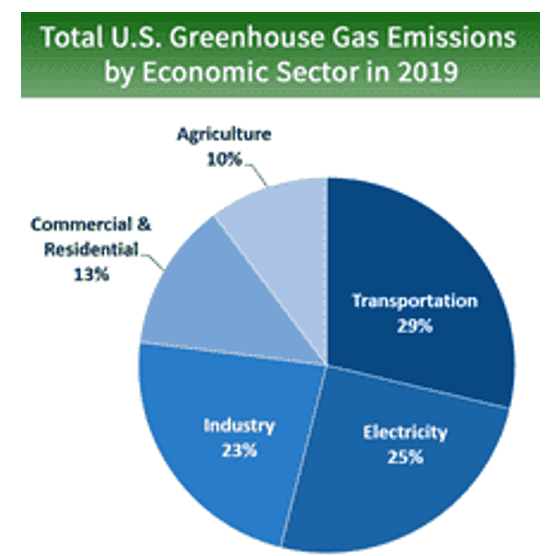
[All percentages above are from the U.S. Environmental Protection Agency.]
Within transportation, the breakdown is light-duty vehicles (cars) 58%, heavy duty vehicles (trucks) 23%, Aircraft 10%, Rail 2%, Ships & Boats 2%, Other 5%. These numbers demonstrate how much greater cars, trucks, and power generation contribute as greenhouse gas emitters compared to other sources.
Within the electric generation category, the breakdown is natural gas 40%, coal 19%, nuclear 20%, and renewable sources 20% (wind 8.4%, hydro 7.3%, solar 2.3%, biomass 1.4%, and geothermal 0.4%). As you can see, renewable sources are still a small part of the total.
So what can we do?
Transportation:
- As individual consumers, we can make our greatest impact in reducing greenhouse emissions by minimizing use of gasoline powered cars (ride a bike or take a bus or train when it’s possible!). Kudos to those who are already driving hybrid or electric vehicles, but we need to be aware that EVs charged with electric power that is not derived from renewable sources defeats the purpose somewhat.
Electric Power:
- A tremendous effort is underway to increase the percentage for renewable sources, particularly wind and solar, to be the primary sources feeding the electric power grid.
- As individual consumers, we can reduce our use of domestic electric power and convert to renewable sources by
- considering installing solar panels,
- supporting the development of wind power,
- looking closely at our electricity bills to see how your power is being generated—you can choose a specific provider (which is different from a distributor like National Grid or Eversource) that offers renewable sources,
- switching to LED bulbs and Energy Star appliances,
- minimizing use of air conditioners in summer, keeping our homes cooler in the winter, and practicing other domestic efficiencies
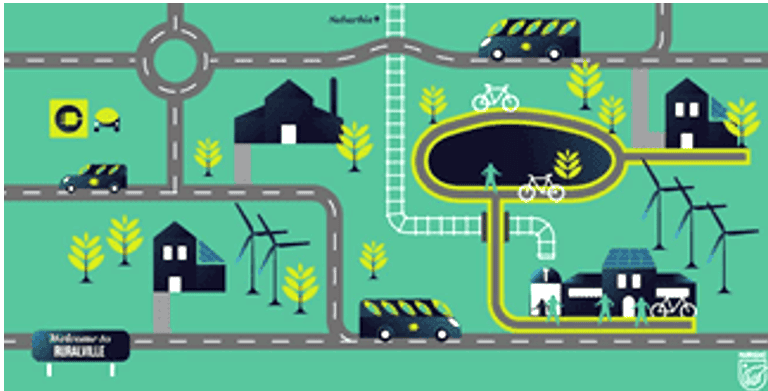
To learn more and get more involved: The Cape Ann Climate Coalition has focus groups in Energy Efficiency and Renewable Energy (and four other areas of concentration) that can help you navigate these issues.
Other resources:
https://www.epa.gov/ghgemissions/sources-greenhouse-gas-emissions
https://goclean.masscec.com/
https://www.energystar.gov/